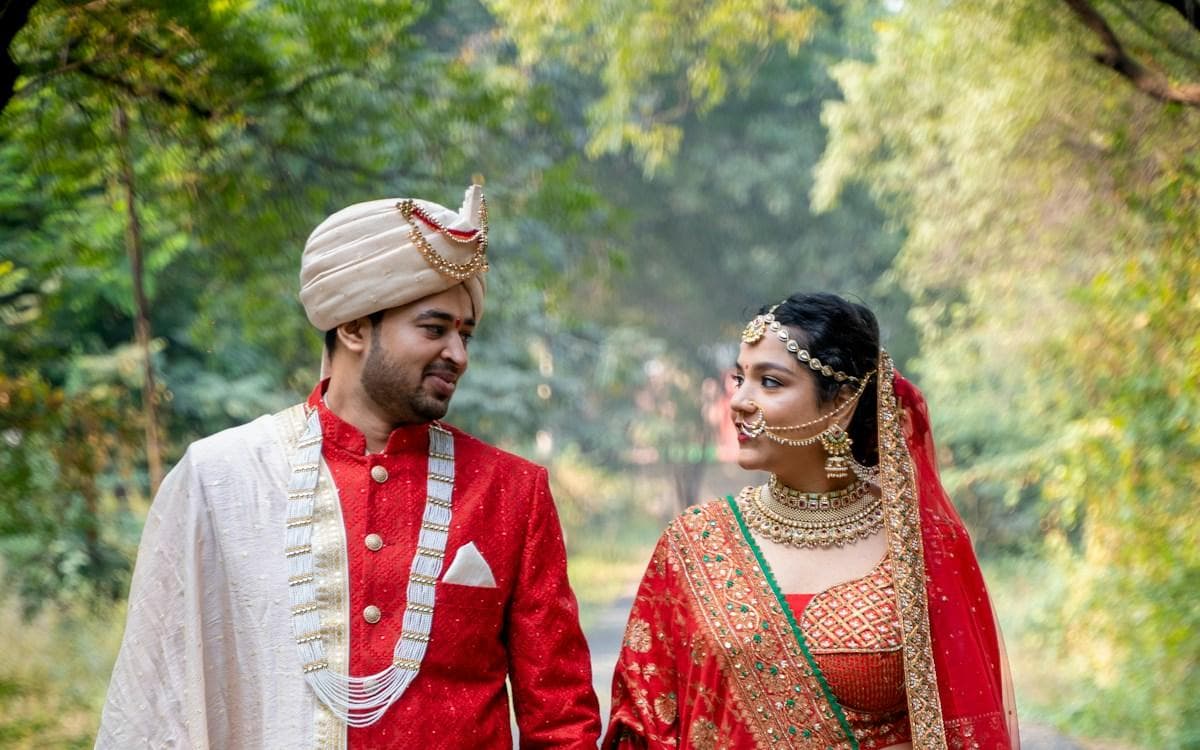
Mehendi and Sangeet are the two functions guests look forward to most and the two most often handled badly on the invitation. They sit before the wedding day, they usually have a different guest list, and they carry expectations about clothing, timing and participation that the main wedding invitation does not cover. The recurring problem is treating them as line items on the wedding schedule. A guest reading "Mehendi — 4 PM, Saturday" has no idea whether to arrive in heavy clothes or light ones, whether food is being served, whether they are expected to perform something at the Sangeet, or whether the invitation extends to their spouse. Here is what each function actually needs on the invitation, with wording you can adapt.
What a Mehendi invitation needs
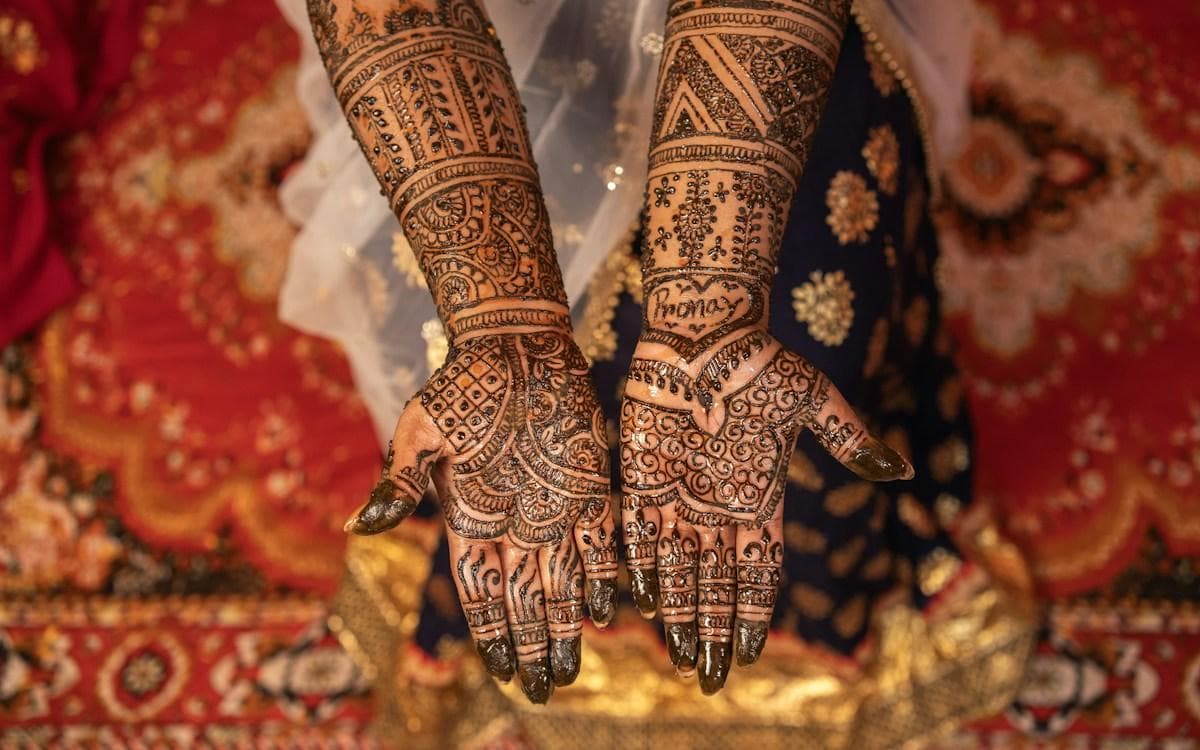
Mehendi is usually daytime, usually at home or a smaller venue, and usually a smaller and more female-weighted guest list than the wedding. It also runs long — a bridal mehendi can take four to six hours, and guests getting their own henna applied will be there a while.
The details guests actually need: the start time and a realistic sense of how long to stay, whether henna artists will be available for guests, whether a meal is being served or only snacks, and the dress code. Yellow, green and orange are conventional; saying so prevents a guest arriving in red and feeling out of place.
One detail that is almost always omitted and almost always asked: whether children are included. Mehendi is often the most child-friendly function of the wedding, and saying so explicitly saves a round of messages.
Sample wording:
- Mehendi — Friday 12 December, 11 AM onwards, at the Sharma residence, Indiranagar. Henna artists will be available for all guests, so come early if you would like yours done. Lunch will be served. Colours: yellow, green and orange. Children very welcome.
What a Sangeet invitation needs
Sangeet has a participation question that no other function has: is the guest expected to perform? For many families the answer is yes for immediate family and cousins and no for everyone else, but guests cannot guess which category they are in.
If there are performances, say so, and say who is performing. Guests who are expected to rehearse need weeks of notice, not a mention on the invitation. Guests who are not performing need to know they can simply attend.
Sangeet is also the function where the dress code shifts most — it is typically the dressiest evening before the wedding itself, and "Indian festive" or "cocktail" tells guests something useful. Timing matters too: Sangeet starts late and runs later, and guests bringing elderly relatives or small children will want to know roughly when dinner is served.
Sample wording:
- Sangeet — Saturday 13 December, 7 PM onwards, Grand Ballroom, The Leela Palace. An evening of music, dancing and family performances. Dinner from 9 PM. Dress code: Indian festive. If you would like to perform, please let Rohan know by 30 November.
Handling different guest lists without awkwardness
Mehendi and Sangeet frequently have a narrower guest list than the wedding, and this is where digital invitations are genuinely easier than printed ones. A printed card listing all functions goes to everyone, including guests invited only to the reception, which either over-invites or requires two print runs.
With a link, you can publish the full schedule and be explicit about which functions are open: "Mehendi and Sangeet are family and close friends; the wedding and reception are for all our guests." Stating it plainly is better than leaving guests to work it out, which produces the exact awkwardness you were trying to avoid.
The alternative approach — two separate invitation links, one with the full schedule and one with only the wedding and reception — works for larger weddings where the difference in guest lists is substantial. Neither is wrong; what matters is that no guest is left guessing whether they were meant to be at something.
Practical details hosts forget
A few recurring omissions, each of which generates messages.
Parking and access. Mehendi is often at a residence, which means street parking and a gate that may be hard to find. A Maps pin solves this; a written address usually does not.
Seating. Mehendi guests sit on the floor in many homes. Elderly guests will want to know whether chairs are available, and will usually not ask.
Timing honesty. If the invitation says 11 AM and the henna artists arrive at noon, guests who came on time spend an hour waiting. Say "11 AM onwards, henna from 12" if that is the reality.
Photography. Increasingly, hosts ask guests not to post photographs before the wedding day. If that matters to you, it belongs on the invitation, phrased warmly — "we would love you to hold off posting until after the wedding" — rather than as a rule announced at the venue.
Quick checklist
- State the dress code and colours for each function separately
- Say whether henna artists are available for guests at the Mehendi
- Make clear whether Sangeet performances are expected, and from whom
- State whether a meal is served and roughly when
- Be explicit about which functions each guest is invited to
- Include a Maps pin, especially for functions at a residence
- Mention seating and access for elderly guests
Frequently asked questions
Start time and a realistic sense of duration, whether henna artists are available for guests, whether a meal or only snacks are being served, the colour or dress code, and whether children are included. A Maps pin matters more than usual because Mehendi is often held at a residence, where the address alone is rarely enough to find the gate.
State it on the invitation and give a deadline: "An evening of music, dancing and family performances. If you would like to perform, please let Rohan know by 30 November." Guests who are expected to rehearse need weeks of notice, and guests who are not performing need to know they can simply attend. Leaving it unsaid produces a round of individual messages asking exactly this.
Say it plainly on the invitation — "Mehendi and Sangeet are for family and close friends; the wedding and reception are for all our guests." Stating it is less awkward than leaving guests to work it out. For larger weddings, publishing two links, one with the full schedule and one with only the wedding and reception, keeps the distinction cleanly.
For Mehendi, yellow, green and orange are conventional and worth naming so nobody arrives in red. Sangeet is usually the dressiest evening before the wedding, so "Indian festive" or "cocktail" is the useful phrasing. Naming them separately matters, because guests otherwise assume one code covers all pre-wedding functions.