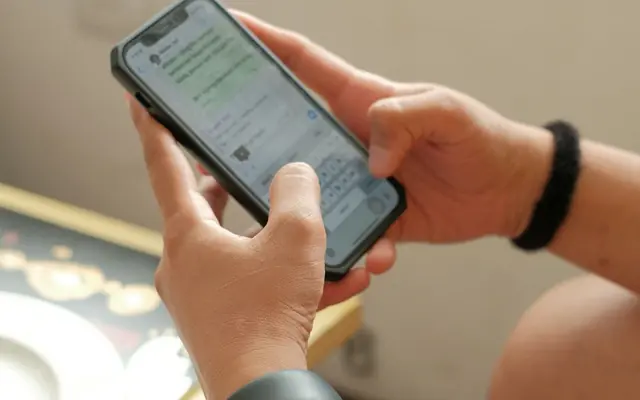
RSVP at an Indian wedding is not what it looks like in American films, a card mailed back with a polite checkbox. It is a running negotiation that happens in WhatsApp messages, phone calls, family group chats, and through intermediaries over a period of weeks. "Tell didi we are definitely coming but Rahul might not make it" is a completely normal RSVP at an Indian wedding. So is a family of seven that RSVPs as "definitely yes" and shows up as twelve, or confirms two and sends none. This is not a complaint. It is just the reality of how Indian family event attendance works, and any guide to RSVP for Indian weddings has to start from this reality rather than from the assumption that guests respond in a linear, predictable way. The tools and systems that work for Western event RSVPs mostly do not work here, because they are built on different assumptions about how people commit to attending things. What does work (repeatedly, across Indian weddings) is a combination of digital wishlist-style response, WhatsApp-native sharing, and a host mindset that treats RSVP as a conversation rather than a form. Here is what that actually looks like in practice.
Why standard RSVP tools fail for Indian weddings
Most RSVP tools are built for the Western event paradigm: send an invitation, receive a yes/no response per person, close the list on a specific date, give the venue a headcount. This paradigm assumes that guests know whether they are attending, decide individually, and communicate their decision directly to the host. None of these assumptions hold cleanly for Indian family events.
Indian wedding attendance is often a family-level decision, not an individual one. When one family member cannot attend, the family may still send a representative. When one family member decides to come, the guest count may quietly expand by two or three. Extended family decisions ripple through sub-groups: the question "are Chacha's family coming?" does not have a single answer until about forty-eight hours before the event. Building a headcount plan around firm RSVP responses leads to catering that is consistently off.
The second failure: most RSVP tools require guests to click a link and fill out a form. For Indian wedding guests (many of whom will simply respond in WhatsApp chat rather than through any dedicated system), this adds a step that most people skip. The host then has to chase form responses while also managing WhatsApp confirmations, which doubles the work rather than reducing it.
What Indian families actually need from an RSVP system is something that captures intent from the people who will use it, gives a directional sense of attendance, and does not create overhead for guests who prefer to communicate in the way they already do.
How the guest wishes section works as a soft RSVP
The guest wishes section on a ShareInvite invitation page is not formally an RSVP mechanism, but in practice, it functions as one. When a guest opens the invitation and leaves a message ("We will definitely be there. So excited for both of you"), the host knows that guest has seen the invitation and is planning to attend. When a guest leaves a message that says "We will try to make it. Wishing you all the happiness in the world," the host knows there is uncertainty. Both of these are more useful than no response.
This soft-RSVP function works because it fits how Indian guests naturally communicate. Leaving a blessing or a congratulatory message is not a formal commitment; it is a relational act. Guests who would not fill out an RSVP form will leave a wishes message because the act of leaving a message is culturally natural. The host gets a view of who has engaged with the invitation, which is a reasonable proxy for attendance intent.
For the host, the wishes section gives something valuable: a list of guests who have seen and responded to the invitation, versus those who have not. This is the most practically useful thing a digital invitation can offer for planning purposes: not a headcount, but a signal of who is paying attention. Follow-up calls can then be targeted to the guests you have not heard from rather than sent broadly.
What actually works for getting attendance numbers
The most effective RSVP strategy for an Indian wedding is a combination of three things: the digital invitation with a wishes section that captures soft confirmation, a WhatsApp message to each family unit asking directly for a count, and a final confirmation call to caterers and venue based on experience rather than firm numbers.
The WhatsApp message asking for counts should be sent to family units, not individuals. "Hi Sharma Uncle, will you all be coming for the reception? How many in your family should we count?" works better than a mass RSVP request because it is addressed to the decision-maker for that family unit. The response may not be exact ("maybe five or six of us"), but it is directional.
One practical approach used by hosts who manage large Indian weddings well: add ten to fifteen percent to the confirmed headcount for catering purposes. Indian wedding caterers know this; they build their own buffer into their estimates. If you tell a caterer three hundred guests and you are genuinely planning for three hundred, you will run short on food. If you tell them three hundred and they plan for three hundred and twenty, you will be close. The "final headcount" for an Indian wedding is always an estimate with a range, and the experienced hosts budget accordingly.
The digital invitation helps most not with the headcount itself but with reducing the volume of individually fielded questions. A guest who knows the venue, schedule, and details from the invitation page generates fewer WhatsApp messages to the host. This frees up the host's attention for the family-unit confirmation conversations that actually matter.
Managing the out-of-city guest problem
Out-of-city guests require a different RSVP conversation entirely, because their confirmation involves travel planning. A family in Kolkata attending a wedding in Pune needs to book flights or train tickets, arrange accommodation, and coordinate multiple people's schedules. Their RSVP timeline is different from a local guest: they are likely to commit or decline earlier, because they have to, and you need to know earlier because you may be arranging accommodation.
Send the digital invitation to out-of-city guests at least three to four weeks before the event. For destination weddings or events involving significant travel, six weeks is appropriate. Include in the WhatsApp message something that signals you know travel is involved: "We know you would need to plan the trip. Let us know if you need any help with accommodation." This is not just hospitality; it is an invitation to begin the RSVP conversation.
For guests staying with the host family, the invitation page can include a note about accommodation ("We have space for some guests; please reach out if you need to stay"), which makes the logistics transparent without putting it awkwardly in the host's individual messages. Knowing who is travelling and whether they need accommodation is the most practically important RSVP information for planning purposes, separate from the total headcount.
The reminder, and when to send it
Send a reminder two to three days before the event. Not one week before. That is too early, and guests have not started thinking about weekend logistics yet. Not the day before. By then, people who need to arrange travel or childcare have already made their decisions. Two to three days out is when guests are actively planning the week ahead and will actually process a reminder.
The reminder does not need to be elaborate. Re-forward the same ShareInvite link with a short message: "Just a reminder for [Bride] and [Groom]'s wedding on [Day] at [Venue]. Here is the link for schedule and directions. See you there!" Three lines. The link. Done. Guests who have been meaning to check the venue details do it now. Guests who were on the fence make their final decision.
For large guest lists, the reminder across all WhatsApp groups takes fifteen minutes with a digital invitation: it is a copy-paste of the same message. The logistics of reminder-sending with physical cards is significantly more complex, involving individual calls or messages to each family unit. The digital reminder is so much less friction that many hosts send it earlier and more specifically: a personal message to key guests they are most hoping to see, alongside the general group broadcast.
Quick checklist
- Enable the guest wishes section. It serves as a soft RSVP that fits how Indian guests communicate.
- Send the invitation to out-of-city guests 3–4 weeks before the event.
- Follow up with a WhatsApp message to each family unit asking for a directional headcount.
- Tell your caterer a number ten to fifteen percent above your confirmed headcount.
- Include accommodation info in the invitation page for guests who need to travel.
- Send a reminder 2–3 days before with the same ShareInvite link.
- Use the wishes section to identify who has not responded, then follow up with those specific guests.
- Build your headcount plan around ranges, not exact numbers. Indian wedding attendance is always directional.
Frequently asked questions
Formal RSVP tools built for Western events (response cards, form submissions, dedicated RSVP apps) tend to add friction without improving accuracy for Indian weddings. The more effective approach is the ShareInvite wishes section as a soft RSVP, combined with a targeted WhatsApp message to each family unit asking for a count. This matches how Indian families actually communicate and gives you more actionable information than a form.
Indian wedding caterers plan for buffer: most quote for the stated number and prepare for ten to twenty percent more. Give your caterer a number slightly above your directional estimate and let them build their buffer on top of that. Never give a caterer your "minimum possible" number for a large Indian wedding; the catering math does not work in your favour. Indian event catering has evolved around exactly this variable-attendance reality.
Re-forward the same ShareInvite invitation link in a short WhatsApp message two to three days before the event. This is when guests are actively planning the week ahead. The reminder message should be brief: three lines, the link, and done. For your closest guests and family, send a personal message rather than only a group broadcast. Guests who receive a personal reminder from the host are more likely to attend and arrive on time.
For local guests, 14–21 days before the wedding is standard. For guests who need to travel from another city, send 3–4 weeks in advance. For destination weddings or events requiring significant travel and accommodation planning, 6 weeks gives guests enough time to book and coordinate. A digital invitation makes it easy to send in batches (out-of-city guests first, local guests a week later) without creating separate materials for each group.