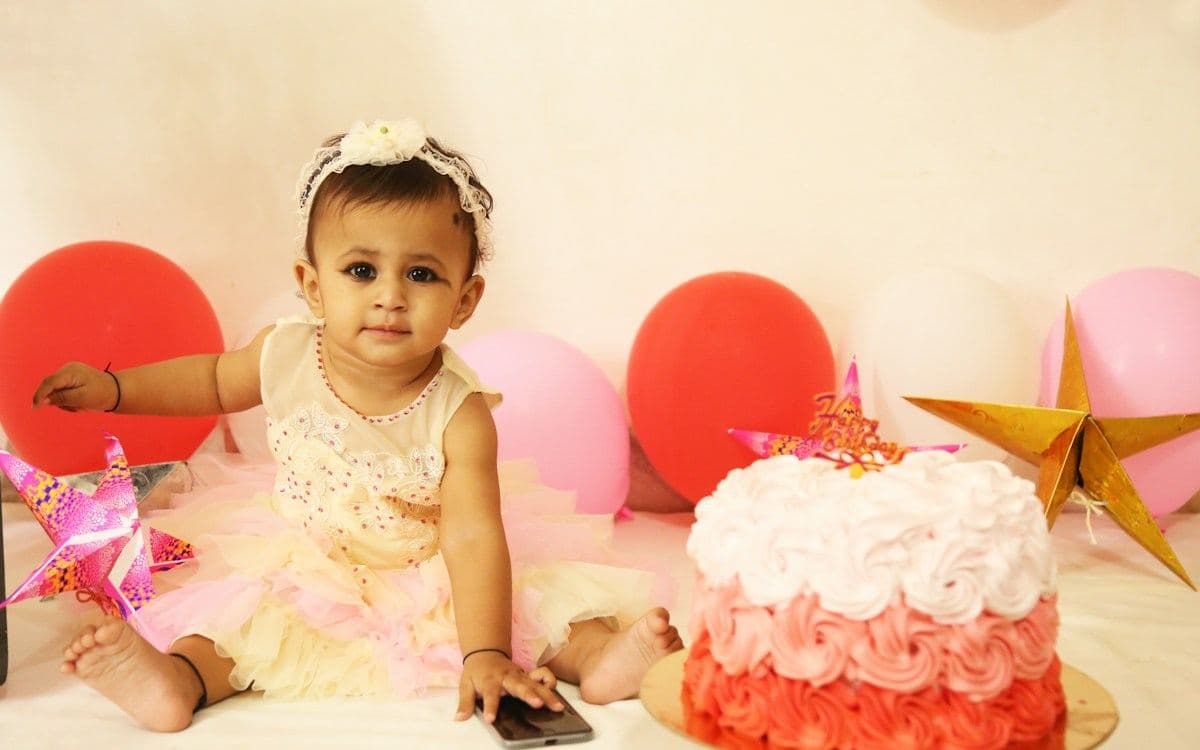
Most birthday invitations give a start time and nothing else. For an adult dinner that is fine. For a children's party, a milestone celebration, or anything running more than two hours, it produces a predictable set of messages: when is the cake, do we need to be there at the start, what time does it end. A published schedule answers all of them at once. It also does something less obvious — it tells guests which part of the event matters, so the people who can only come for an hour know which hour to choose. Here are schedules that work for the common formats, and how much detail to put on the invitation.
A children’s party schedule
Children's parties run on a tighter clock than adult events, because the children have a limited attention span and the parents have a pick-up time in mind.
A two-and-a-half hour format that works:
- 4:00 PM — Arrival, free play
- 4:30 PM — Games and activities
- 5:15 PM — Food for the children
- 5:45 PM — Cake cutting
- 6:15 PM — Return gifts and goodbyes
Cake cutting is the anchor. Parents planning around it will ask if you do not publish it, and late-arriving guests routinely miss it. Putting it on the invitation means a parent arriving at 5:30 knows they are in time.
Keep arrival to a thirty-minute window at the start. "4:00 PM onwards" with no structure means children arrive across ninety minutes and the games never start properly.
An adult birthday dinner
Adult events need less structure, but two times still matter: when to arrive and when the moment happens.
- 7:30 PM — Drinks and snacks
- 8:30 PM — Dinner served
- 9:30 PM — Cake and toast
- 10:00 PM onwards — Music
The value here is that a guest who cannot come until nine knows they will make the cake, and a guest who has to leave at nine knows they will not. Without that, both guess.
For a surprise, the schedule serves a different purpose — it establishes the arrival deadline. Put "please arrive by 7:15" prominently, above the schedule, and make clear the surprise happens at a fixed moment.
Milestone celebrations with a programme
First birthdays, sixtieth birthdays and similar milestones often include a ceremony or a programme, and these need the most detail because guests are travelling and elders are involved.
- 11:00 AM — Guests arrive
- 11:30 AM — Pooja / ceremony
- 12:15 PM — Speeches and family programme
- 1:00 PM — Lunch
- 2:30 PM — Cake cutting and photographs
Where there is a muhurat or a ceremony with a fixed start, treat it the way a Griha Pravesh invitation treats the muhurat: state it separately and add an arrival time before it.
If there are speeches or performances, saying so lets the people involved prepare and lets everyone else know the event has a seated portion. Guests who expect a standing reception and find a ninety-minute programme will have made the wrong childcare arrangements.
How much to put on the invitation
There is a balance. A five-line schedule is useful; a fifteen-line one reads like a conference agenda and nobody finishes it.
Put on the invitation: arrival, the anchor moment (cake, ceremony, speeches), when food is served, and the end time. That is four lines and it answers almost every question.
Leave off: setup details, vendor timings, and anything that might change. A schedule that shifts after the invitation has gone out is worse than no schedule, because guests plan around it.
End time is the single most valuable line and the most commonly omitted. For children's parties it is essential — parents are arranging pick-up. For adult events it signals the register of the evening: a party ending at 11 PM is a different event from one with no stated end.
If the schedule is genuinely uncertain, hold the invitation until it is confirmed — a published invitation cannot be edited, and a corrected link is one more message in every group.
Quick checklist
- Publish the cake cutting time — it is the most asked-about detail
- Give a thirty-minute arrival window rather than an open start
- State when food is served, and what kind
- Always include an end time, especially for children’s parties
- For a surprise, put the arrival deadline above the schedule
- Flag any seated programme or speeches in advance
- Keep the schedule to four or five lines on the invitation
Frequently asked questions
For anything longer than two hours, yes. Four lines is usually enough: arrival, the anchor moment such as cake cutting or a ceremony, when food is served, and the end time. It answers most of the questions guests would otherwise send individually, and it tells guests who can only attend part of the event which part to choose.
Roughly forty-five minutes before the end — after food and before return gifts. In a 4:00 to 6:15 party, around 5:45 works. Publishing the time matters more than the exact slot: parents plan around it, and late-arriving guests otherwise miss it.
Two to two and a half hours is the common format, with a thirty-minute arrival window at the start. Longer than that and younger children tire; an open-ended start means guests arrive across ninety minutes and the games never begin properly.
The end time. Parents arranging pick-up need it, and for adult events it signals the register of the evening. It is the detail hosts most often omit and guests most often ask about.