The honest answer is that most Indian families in 2026 are not choosing between digital and printed. They are using both, but for completely different reasons. The printed card goes to grandparents, the groom's family elders, and the three or four relatives for whom receiving a physical card in an envelope is part of how they know they were genuinely invited. The digital link goes to everyone else, which is usually the other four hundred and fifty people on the list. This is not a compromise. It is actually the more thoughtful approach, once you accept that the two formats are not doing the same job. A printed card is a cultural artifact. A digital invitation is a logistical tool. When families try to make one format do both jobs, they end up with either a printed card that no one can navigate from or a digital invitation that feels ceremonially thin. What I want to do in this piece is be honest about what each format is actually good at, because most of what gets written on this topic is either defensive about printed cards or overselling digital. Having watched thousands of families work through this on ShareInvite since we launched in 2026, there are things I know about how this plays out in practice that do not show up in the comparison articles.
The honest answer most comparison articles will not give you
Printed cards are not obsolete. They are still the right choice for certain guests and certain relationships. An elder in the groom's family who has never received a digital invitation and for whom a hand-delivered card with sweets is the proper way to be invited: giving that person a WhatsApp link is a real cultural misstep. The card is not just informational; it is relational. It communicates that the hosts thought of this person specifically and made an effort on their behalf.
The mistake is extending this logic to the entire guest list. Printing four hundred cards costs real money (typically ₹15,000 to ₹40,000 for a mid-range job with courier or local delivery), and most of those cards serve the same function as the WhatsApp message that gets sent anyway. The card recipient reads it once, notes the date, and then searches their WhatsApp on the morning of the wedding for the venue address. The card is somewhere in a bag. The phone has the map.
The relevant question is not "digital or printed" but "which guests need a printed card and why." For most families, that list is genuinely small: fifteen to thirty people. Printing forty cards for the inner circle is a reasonable decision. Printing five hundred because tradition says so, while also sending a WhatsApp link to every single person on the list, is paying twice for the same communication.
When printed cards are actually the right choice
Printed cards remain the right choice in specific situations, and it is worth naming them clearly rather than pretending the decision is always obvious.
Elders who are not on WhatsApp or do not use smartphones (and there are still many in this category, particularly in joint households in smaller cities) genuinely need a physical card. They cannot open a link. The card is not a nicety for them; it is the only format they can actually use.
Families where the invitation itself is part of the ceremony (where the act of delivering the card in person, sometimes with sweets or prasad, is how relationships are maintained) should not digitise this. The value of the invitation in these contexts is the delivery, not the information it contains.
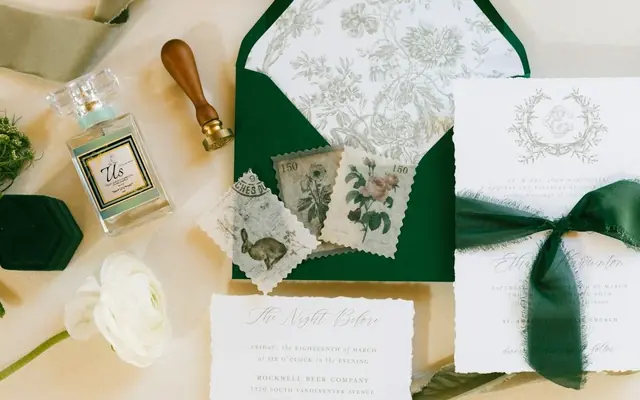
High-end weddings where the card itself is a luxury object (embossed, with ribbon, in a custom box) are using the card as a statement about the scale of the occasion. A beautifully produced physical card communicates a level of investment that a digital link, however well-designed, cannot quite replicate. For this use case, the printed card is not a logistical choice; it is an aesthetic one.
Outside these specific situations, the case for printed cards is mostly sentimental rather than practical. Sentiment matters, but it is worth being honest about the cost of acting on it at scale.
What a digital invitation can do that a printed card never could
The difference that matters most in practice is not the design. It is the Maps pin.
On the morning of a wedding, a meaningful percentage of guests (especially those who are not familiar with the venue area, or who are navigating in a new city) will call the host for directions. On a day that is already logistically complex, these calls are a tax on the host's attention at the worst possible time. A digital invitation with a Google Maps link pinned to the main gate of the venue eliminates almost all of these calls. I have had hosts come back to ShareInvite after their event specifically to mention this: "No one called us for directions. It was the first time."
The second thing a digital invitation can do that a printed card cannot is be updated after it is sent. When the wedding hall double-books a room and the ceremony location changes three days before the event (and this happens more often than anyone admits), a digital invitation is edited once and all five hundred guests have the correct venue the moment they open the link. The printed cards are already distributed with the wrong address. The host sends a WhatsApp message explaining the change. Half the guests miss the message. Some arrive at the wrong location.
The third thing is the guest wishes section. A printed card generates no response: it is a one-way communication. A digital invitation page where guests can leave a blessing or a message creates a record that hosts and couples return to for years. For guests who cannot attend (the relative who is abroad, the friend who is sick, the elderly family member who cannot travel), the wishes section is the only way to participate in the ceremony. Families consistently tell us this feature, which most people overlook when creating an invitation, turns out to be one of the things they value most after the event.
The cost comparison, and why the real number surprises most families
The visible cost of printed cards is the printing and delivery. For a wedding of three hundred guests, mid-range printed cards with envelopes, local courier or delivery, and design typically cost between ₹20,000 and ₹50,000. Premium cards (thick paper, embossing, box packaging) can cost significantly more.
But there is a hidden cost that rarely gets calculated: the time and coordination involved in printing, distributing, and tracking down who has and has not received a card. In joint households where the responsibility is split between family members, this coordination is real labour. The cousin who is supposed to deliver forty cards to relatives in another neighbourhood. The aunt who was going to bring cards to her colony but forgot. The ten cards that need to be posted to out-of-city family, requiring someone to go to the post office. This time has a cost even if it is not a line item.
A digital wedding invitation on ShareInvite starts at ₹199. Most designs are ₹99–₹499; the Gala birthday weekend is ₹1,299; the Signature wedding suites are ₹1,499–₹3,999. You can build and preview any of them before paying. At that price point, the comparison to printed cards is not competitive; it is absurd. The premium invitation costs less than the printing cost for ten printed cards, can be shared with any number of guests, and updates automatically if anything changes.
What most families end up doing is a hybrid: twenty-five to thirty printed cards for the inner circle, costing ₹2,000 to ₹5,000 with quality printing, and a ShareInvite link for everyone else. This combination costs a fraction of a full printed run and does the communication job better for ninety percent of the guest list.
How most Indian families are actually solving this in 2026
The pattern I observe most consistently in 2026 is the hybrid approach, not as a compromise, but as a deliberate strategy that uses each format for what it is best at.
A typical Bengaluru wedding: twenty to thirty printed cards, hand-delivered or couriered, for the closest family elders on both sides. A ShareInvite link shared across twelve WhatsApp groups covering the rest of the guest list. The same link serves as the primary reference for venue navigation on the day. After the event, the wishes section has 140 messages: relatives who came, relatives who could not come, a childhood friend who is now in Canada.
This approach also solves the specific Indian problem of multiple events. A five-event wedding (Mehendi, Sangeet, Haldi, Ceremony, Reception) is very difficult to communicate cleanly on a single printed card without making it look cluttered. A digital invitation page handles multiple events naturally, with each event listed clearly with its own time and venue. Different guests attend different events; they can check the schedule rather than calling to ask which event they are supposed to attend.
The families who are still printing five hundred cards and also sending a WhatsApp link are typically the ones who have not recalibrated since the last time they planned a large event. Once they see the cost breakdown and talk to a family that did the hybrid approach, the conversation changes quickly. It is hard to argue for spending ₹40,000 on something that fifty percent of recipients lose before the event day.
Quick checklist
- Identify the 20–30 guests who genuinely need a printed card: elders, inner circle, those without smartphones.
- For everyone else, create a ShareInvite digital invitation with the complete schedule, venue map, and wishes section.
- Always pin Google Maps to the main gate or entrance, not the building centre, especially for new venues.
- Enable the guest wishes section. It is what guests remember most after the event.
- Test the WhatsApp link preview before sharing to any group.
- If anything changes (venue, timing), edit the invitation so the same link shows it, and send a one-line note on what changed.
- Send a reminder reshare of the link 2 days before the event. This is when most guests look up the venue.
- Budget for 20–30 quality printed cards rather than 500 mid-range ones. The savings are significant.
Frequently asked questions
For most guests, no. A well-designed digital invitation link on WhatsApp is now widely accepted across urban and semi-urban India. The exception is elderly family members for whom a physical card is part of how they understand being properly invited. For these specific guests, typically fifteen to thirty people in a family, a printed card is still the appropriate choice. For everyone else, a premium digital invitation communicates as much care and effort as a printed card, especially when the design is polished and the content is complete.
On ShareInvite, a digital wedding invitation starts at ₹199 as a one-time cost. Most designs are ₹99–₹499; the Gala birthday weekend is ₹1,299; the Signature wedding suites are ₹1,499–₹3,999. The Signature suites add every function, travel and stay, FAQs and RSVP. You can build and preview any of them before paying. This covers unlimited guests and every feature in the design you choose (Maps, gallery, countdown and guest wishes) through the event and for three days after. Compare this to printed cards: a mid-range print run of three hundred cards typically costs ₹15,000 to ₹40,000 with design and delivery.
Yes, and this is what most families do. A typical approach is twenty-five to thirty printed cards for elders and inner circle, and a ShareInvite link for everyone else. The digital invitation does the practical work (navigation, schedule reference, updates) while the printed cards carry the cultural and relational weight for the guests who value them. The total cost of this hybrid approach is usually lower than a full printed run.
With a digital invitation, you update it once on ShareInvite and all guests see the correct information the next time they open the link. No resending required. With printed cards, there is no clean solution: you have to send a WhatsApp message or make calls explaining the change, and some guests will still arrive with the wrong information. Last-minute changes to venue or timing are common in Indian event planning, which is one of the strongest practical arguments for digital invitations.