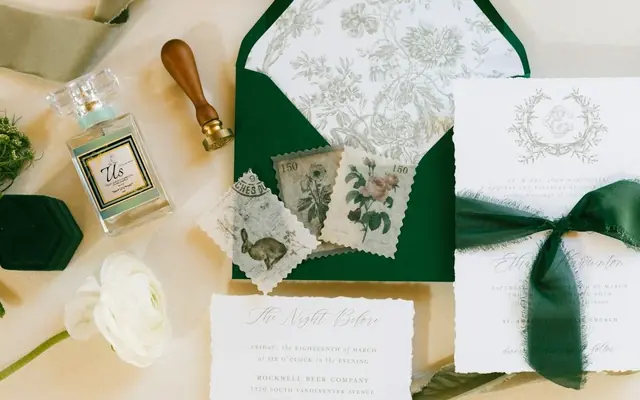
The first time I noticed the shift was not in a survey or a market report. It was watching my neighbour's family, a joint household of three generations in a three-bedroom flat in Pune, trying to figure out what to do when the wedding hall changed six days before the ceremony. They had already printed and distributed three hundred physical cards. The new venue was on the other side of the city. The uncle who had done the card printing was not happy. The mother-in-law, who had hand-delivered forty cards to relatives in her colony, was even less happy. By the time everything was explained via individual phone calls, two elderly relatives still showed up at the wrong address on the wedding morning. That story is not unusual. I have heard versions of it from many families since I started ShareInvite: the venue that changed, the muhurat that shifted by an hour, the hall whose name was spelled wrong on a thousand printed cards. Physical invitations are beautiful objects and genuinely meaningful in Indian culture. But they are also fragile in ways that nobody talks about. The shift to digital is not happening because Indians have stopped caring about tradition. It is happening because the practical problems with physical cards were always real, and now there is a better option. What I want to write about here is the actual texture of that shift, not the version that shows up in tech press releases about India's digital adoption rate, but the version I have observed in the way real families navigate a real cultural tension. How convenience came first, how culture caught up, and why the acceleration happened faster than even I expected when I started building this.
It started with convenience, not culture
Nobody decided that digital invitations were culturally acceptable and then switched. It happened the other way around. Families switched because something went wrong (a date change, a venue change, an out-of-city family member who needed directions at 7 AM on the wedding day) and the WhatsApp link was already there, already sent, already holding every detail. The cultural acceptance came quietly, after the fact, once enough people had experienced it working.
The Bengaluru tech worker whose parents are in Hyderabad and whose in-laws are in Chennai is the clearest case study of why geography drove this before anything else. Printed cards require someone to physically deliver them, or to post them, or to bring them on a visit. For families spread across cities, which is now a majority of urban Indian families in their thirties, the logistics of physically distributing a card to everyone who matters is genuinely complicated. You end up with a two-tier system where close local relatives get a proper printed card and distant relatives get a photo of the card on WhatsApp. Once you are already sharing the card on WhatsApp, the question becomes: why not share something better on WhatsApp?
The other driver was last-minute logistics, which are a structural feature of Indian event planning rather than an exception. Venues get double-booked. Muhurats get revised when the astrologer recalculates. Caterers change. The baraat timing shifts because the groom's side negotiated a later start. None of this is unusual: it is simply how events unfold when you are coordinating between multiple families, priests, venues, and caterers simultaneously. A printed card cannot handle any of these changes. A digital invitation can be corrected and re-sent to every group in minutes.
WhatsApp changed what an invitation could do
Before WhatsApp became India's default communication layer, digital invitations made sense in theory but struggled in practice. Email felt impersonal to families for whom the invitation ritual carries relational weight. SMS had no visual space. Social media was public in ways that felt wrong for a private family ceremony.
WhatsApp changed this because it is already where Indian families live. It is where the family group chat is. It is where the wedding planning happens. It is where the venue directions get shared and where the out-of-city uncle asks what time to arrive. The invitation fits naturally into this context in a way it never did in email. When someone in the family group receives a wedding invitation link, they are receiving it in the same place where they already have a relationship with the sender. It does not feel like a notification from a platform. It feels like a message from family.
But WhatsApp did something else that is less obvious: it turned the invitation into a navigable object. A printed card is a static document. A WhatsApp link to a digital invitation is a door: guests tap it and get the full schedule, the venue address, a Google Maps pin, and a blessings section where they can leave a message. The card cannot do any of this. For guests who are driving to an unfamiliar wedding hall on a weeknight, that Maps pin is worth more than the design of the card itself. I have had families tell me the single feature that sold them on digital invitations was not anything visual: it was that guests stopped calling them for directions. When I hear that, I understand exactly what is actually happening here. It is not about going digital. It is about removing friction from a process that was full of it.
The moment families stopped worrying about whether digital was 'proper'
There was a period, roughly two to three years before ShareInvite launched, when the specific objection I kept hearing from families was not about cost or quality. It was about whether sending a digital invitation would read as cheap. As cutting corners. Whether the elders in the family, or the in-laws' family, would take offence at receiving a link instead of a card.
This is a real cultural concern and I want to take it seriously rather than dismiss it. In Indian family culture, the invitation is not just logistical communication. It is a statement of how much you value the guest. Printed cards have traditionally carried this weight because they represent effort, expense, and the physical act of delivery. An uncle who received a hand-delivered card with a box of sweets was being honoured in a way that a WhatsApp message could not replicate.
What changed was not that families decided to care less about this signal. What changed is that the quality of digital invitations crossed a threshold where they began to signal effort and care in their own right. A well-designed invitation page with a couple's photo, background music, a ceremony schedule laid out properly, and a guest wishes section is not a cheaper version of a card. It is a different kind of thing that carries its own markers of care. The moment a family elder received a digital invitation, opened it, saw a photograph of the couple and a wishes section with heartfelt messages already in it, and then left their own blessing, that is when the cultural objection faded.
In joint family households in cities like Ahmedabad and Kolkata where I have talked to families, the tipping point was often when the family elder themselves mentioned receiving a digital invitation they loved. Once the seventy-year-old grandmother says the invitation was beautiful, the younger generation stops worrying about whether digital is acceptable. The grandmother has already decided.
What the numbers from Indian weddings actually show
I want to be careful here because the numbers that get cited in pieces about India's digital adoption are often national internet penetration figures that do not say anything specific about invitation behaviour. What I can share is what I have observed directly through ShareInvite.
The events where families adopt digital invitations fastest are not the most modern or tech-forward events. They are the most complex ones. Large North Indian weddings with five or six sub-events (Mehendi, Sangeet, Haldi, Baraat, Pheras, Reception) spanning three days and two venues benefit enormously from a single invitation page that lists everything in one place. Multi-event weddings are where the case for digital invitations is most obvious, because the alternative is a printed card that either crams everything onto one dense page or requires multiple separate cards.
The second pattern: families with significant out-of-city guests adopt digital faster. When a meaningful portion of your guest list is in another city and needs to book travel, a digital invitation with clear event-by-event schedules and venue Maps links does real work that a physical card cannot. Families whose weddings bring together guests from Mumbai, Delhi, and Hyderabad have a genuine logistical need that printed cards were never designed to meet.
The third pattern is the one that surprised me most: older guests are not the holdouts. The resistance to digital invitations, where it still exists, tends to come from the middle generation: parents in their fifties who are conscious of social signals and what the extended family will think. The younger generation wants digital for practical reasons. The older generation often embraces it once they experience it. The parents are the ones who need the most convincing, and they are usually convinced by seeing a well-made invitation rather than by any argument.
Why the shift accelerated faster than anyone expected
When I started ShareInvite, I expected the adoption curve to be slow. Indian families are, reasonably, conservative about changing rituals that carry social and emotional weight. I built for a five-year timeline to reach the point where digital invitations would feel normal rather than novel.
It happened much faster than that. The acceleration had several causes, but the most significant was the pandemic. Two years of weddings conducted under guest limits and last-minute permission changes created a generation of Indian families who had direct experience of what happens when your physical invitations are useless the moment conditions change. Families who had printed cards that became invalid when guest caps changed, who had to manage real-time communication with hundreds of guests about whether the event was happening and in what form, learned in the most direct way possible why digital invitations matter.
The second accelerant was the smartphone camera. As the quality of phone cameras improved and pre-wedding photography became a standard part of middle-class wedding culture, couples had genuinely beautiful images they wanted to share. A printed card could carry one photo, at low resolution, with significant printing cost. A digital invitation could carry a gallery of photos at full resolution, with background music, for a fraction of the cost. The invitation became a better canvas for the content families actually wanted to share.
The third accelerant was word of mouth within family networks: specifically, the moment when a guest at one event received a digital invitation they genuinely admired and then used the same platform for their own event. Digital invitations are shared via WhatsApp, which means every invitation is also a product demonstration to everyone who receives it. When someone receives a beautiful digital invitation for a cousin's wedding and thinks "I want this for mine," the discovery and adoption happen in the same moment. This is a fundamentally different marketing dynamic than any physical product, and it is why the growth has been faster than I modeled.
There is something else worth saying, which is less comfortable to state plainly: physical printed cards have been getting worse for a decade, not better. The economics of print shops in mid-sized Indian cities have deteriorated. Design quality has flatlined. Prices have gone up as volumes have gone down. The gap between what a good digital invitation can be and what an average physical card actually looks like has widened considerably. Families switching to digital are not just getting convenience. They are often getting a better-looking invitation than they would have gotten from the printer, at lower cost, with features the printer could never provide.
Quick checklist
- Send the invitation as a WhatsApp link, not an image file: a link stays navigable; an image gets buried in media.
- Include a Google Maps pin to the exact gate or entrance, not just the venue name. This is the feature guests use most on the wedding day itself.
- Enable the guest wishes section so the invitation becomes interactive and the host sees who has engaged with it.
- Check every detail in the preview before publishing. If something changes later, edit the invitation and the same link shows the new details.
- List every sub-event with timings on the invitation page: Mehendi, Sangeet, Baraat, Pheras, Reception. One page does all of it.
- Upload a couple photo or family photo to the invitation. The visual is what makes guests feel they received something personal rather than a logistics notice.
- Send a reminder two to three days before the event via the same link. Most guests look up venue details on the day or the day before.
- For multi-city guest lists, mention the venue city in the WhatsApp message text itself so distant family can immediately assess whether travel is needed.
Frequently asked questions
Yes, and increasingly they are the default for the broad guest list. Many families use a digital invitation for the full guest list and reserve printed cards, if any, for elder relatives who prefer a physical keepsake, but even this distinction is fading as digital invitations have improved in quality and as more elders have received and appreciated digital invitations from other family events. A well-designed digital invitation that displays both families' names correctly, carries the full ceremony schedule, and includes the venue map communicates the same formality as a printed card.
Generally yes, and often with more enthusiasm than the middle generation. The practical features (the Maps link, the reminder message, the ability to revisit the invitation schedule) are often more useful to older relatives navigating an unfamiliar area than to younger guests. The resistance to digital invitations, where it exists, is usually in the fifty-to-sixty age group who are thinking about social signals to their own peer group. The resistance is better handled by showing them a well-made invitation than by arguing about the principle.
Because WhatsApp is already where Indian families communicate. The family group chat, the wedding planning coordination, the last-minute logistics: all of it happens on WhatsApp. An invitation sent there arrives in the context of an existing relationship rather than in a cluttered inbox. It also arrives as a link that generates a preview card showing the invitation image and event title, which functions as a visual announcement in the group. Email has a place for corporate or distant contacts but has never been the primary way Indian families communicate for personal events.
Edit the invitation on ShareInvite (from your dashboard, or with the Edit link in your email) and save. The same link now shows the new details to everyone, including guests who opened it days ago. For a change that matters, like a new time or venue, also send a short WhatsApp message saying what changed. It is still far easier than a printed card: one message to each group, rather than a round of phone calls. Guests who ignored the original link will often open it when they receive the update message, so the notification of a change also catches up stragglers who had not read the full invitation.