A Griha Pravesh invitation lives or dies on two things: the muhurat time and the address. Get either wrong and guests either miss the ceremony or spend twenty minutes circling a new development looking for a gate. This is the one invitation where timing is not flexible. A wedding reception that starts half an hour late is normal. A Griha Pravesh homam begins at the muhurat, and guests arriving afterwards have missed the part they came for. The invitation has to communicate that without sounding officious. Here is how to structure the schedule, what the address needs to include, and wording you can adapt.
Publishing the pooja schedule
Most Griha Pravesh ceremonies follow a recognisable sequence, and listing it with times tells guests when to arrive and how long to stay.
A typical morning:
- Ganesh Pooja — 9:00 AM
- Vastu Shanti Homam — 9:45 AM
- Griha Pravesh muhurat — 10:30 AM
- Kalash sthapana and milk boiling — 10:45 AM
- Prasad and lunch — 12:30 PM onwards
Two of these matter most to guests. The muhurat, because it is the moment of entering the house and the one nobody wants to miss. And lunch, because guests travelling an hour each way want to know whether they are staying for a meal.
State the muhurat explicitly and separately, not buried in a list. "Griha Pravesh muhurat at 10:30 AM — please arrive by 10:15" does more work than any other line on the invitation.
The address problem
New homes are the hardest addresses in India to find. The building may not be on Maps yet, the locality may have three roads with similar names, and the gate may be on a different road from the postal address.
A written address is not sufficient. What guests need:
- A Google Maps pin, tappable from the invitation
- The building or apartment name, and the flat number
- A landmark that exists — a temple, a school, a main road junction
- Which gate to use, if the complex has more than one
- Where to park, and whether visitor parking requires a pass
The parking detail is the most commonly omitted and the most commonly asked about. Gated complexes often require visitors to be registered at the gate; if that applies, say so, and say what guests should tell security.
If the building is genuinely not on Maps, drop a pin at the location and share that pin rather than an address search result. A pin at the actual gate is worth more than a correct postal address.
Wording you can adapt
Traditional, with the ceremony named:
- With the blessings of the Almighty, we invite you to the Griha Pravesh of our new home on Sunday 17 November. Ganesh Pooja from 9:00 AM, Griha Pravesh muhurat at 10:30 AM, lunch from 12:30 PM. Flat 4B, Lotus Residency, Sector 62, Noida. Please arrive by 10:15 for the muhurat. Directions: [link]
Simpler and warmer:
- We have moved! 🏡 Join us for our house warming on Sunday 17 November. Pooja at 10:30 AM, lunch to follow. Flat 4B, Lotus Residency, Sector 62, Noida. Would love to have you bless the new place: [link]
For a regional variant, use the name your family uses — Gruhapravesham, Ghar Pravesh, Vastu Puja. Guests recognise the term and it signals the register of the event.
Keep "please arrive by" in the invitation itself rather than adding it later in a group message. It is the instruction most likely to be missed if it arrives separately.
Details hosts forget
Footwear. Many families ask guests to remove shoes at the door, and for a ceremony with fifty guests that means a pile at the entrance. Saying "shoes off at the door" in advance is not rude; it lets guests choose footwear accordingly.
Whether to bring anything. Guests will ask. Decide in advance whether you want gifts, and say so. "Your presence and blessings are all we need" is conventional and reads well. If you would welcome something specific — plants are traditional for a new home — say that instead.
Duration. A guest who thinks they are attending a one-hour pooja and finds themselves at a four-hour event with lunch will have planned badly. Publishing the full schedule with an end time solves this.
Children and elders. Say whether there is seating, since many Griha Pravesh ceremonies are conducted with guests seated on the floor. Elderly relatives will want to know whether chairs are available.
Quick checklist
- State the muhurat time separately and add a "please arrive by" time
- Publish the full pooja sequence with timings
- Include a Google Maps pin at the actual gate, not just an address
- Name a real landmark, the gate to use, and where to park
- Say whether visitors must register at the security gate
- State whether lunch or prasad is being served, and when
- Mention floor seating and shoe removal in advance
Frequently asked questions
The muhurat time stated separately with a "please arrive by" time, the full pooja sequence with timings, whether lunch is served, and an address that guests can actually use — a Maps pin at the gate, the flat number, a real landmark, which gate to use, and where to park. New homes are the hardest addresses in India to find, and a written address alone is rarely enough.
Fifteen minutes before the muhurat. Unlike a reception, a Griha Pravesh homam begins at the appointed time regardless of who has arrived, so guests who arrive at the stated muhurat have already missed the entry. Put "please arrive by 10:15 for the 10:30 muhurat" on the invitation itself rather than in a follow-up message.
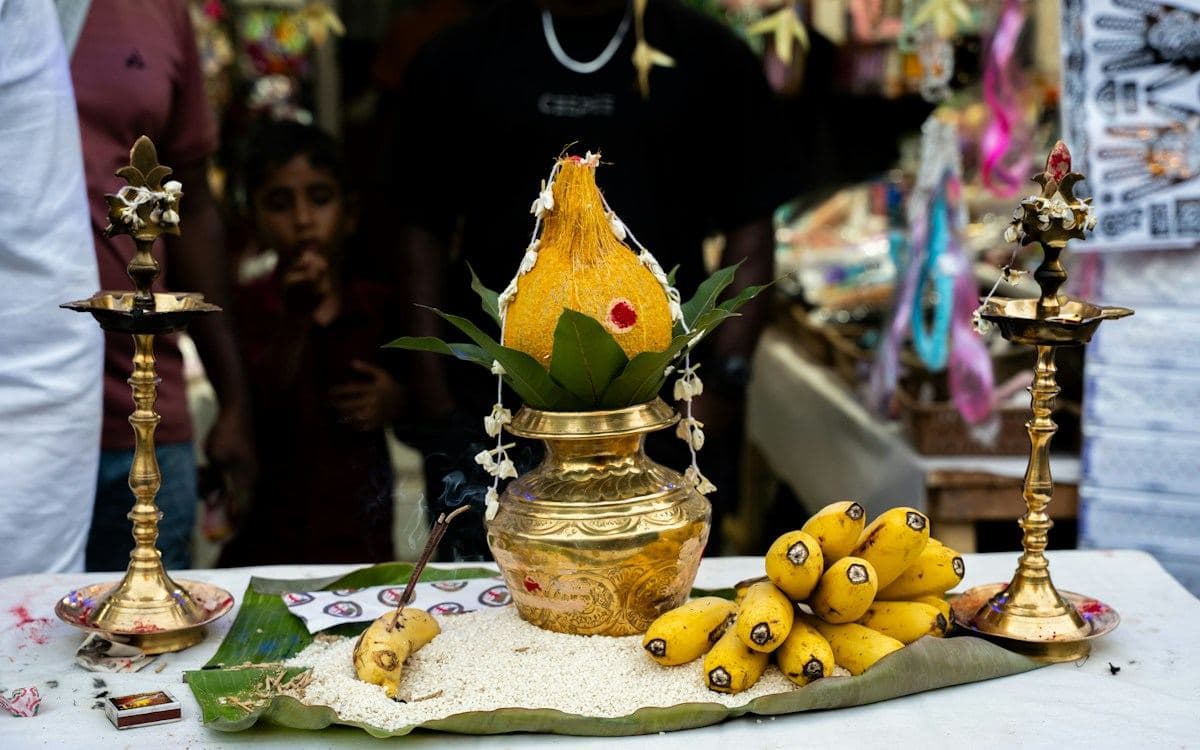
Commonly Ganesh Pooja first, then the Vastu Shanti homam, then the Griha Pravesh muhurat when the family enters the house, then kalash sthapana and the boiling of milk, then prasad and lunch. Timings vary by family and priest, so publish the sequence your priest has given rather than a generic one.
Decide and state it, because guests will otherwise ask individually. "Your presence and blessings are all we need" is the conventional phrasing. If you would welcome something specific — plants are traditional for a new home — saying so is more helpful than leaving it open.