An engagement invitation is usually the first thing two families send out together, and it is often written in a hurry — the date gets fixed, the venue is booked, and the invitation goes out in a week. That compressed timeline is where mistakes happen. One family's surname is spelled wrong. The invitation names only the couple, and an uncle notices. The venue has two banquet halls and the invitation does not say which. None of these are catastrophic, but they are the kind of thing an Indian family remembers. This is a checklist built around the things that actually go wrong, in the order you should settle them.
Settle the names before anything else
Agree, in writing, between both families: the exact spelling of every name that will appear, which parents are named, and in what order.
Spelling is not trivial. Families spell the same surname differently — Iyer and Iyar, Chowdhury and Choudhury — and using the wrong one on a formal invitation is noticed. Ask each family to send their names exactly as they want them printed, and use that text verbatim rather than retyping it.
Order matters in many communities. Traditionally the bride's family is named first on an engagement invitation, but this varies, and the safest route is to ask rather than assume. Where one parent is deceased, agree how they are referenced — "the late Sri Ramesh Iyer" is common, and whether to include it at all is the family's decision, not the designer's.
Get this confirmed by both families before any design work starts. Changing names after an invitation has circulated is far worse than a short delay.
The details guests need
Beyond names, an engagement invitation carries a compact set of facts.
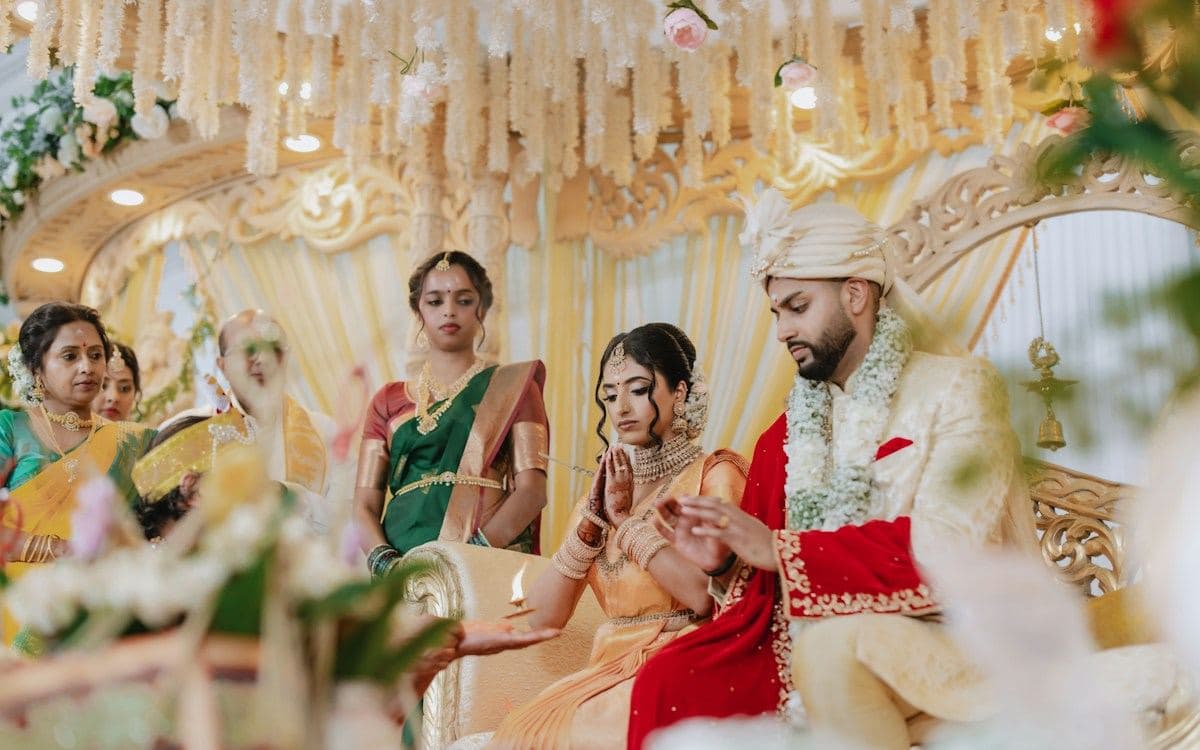
- The ceremony name your family uses — Roka, Mangni, Sagai, Nishchayathartham
- Date and the exact start time, plus the muhurat if there is one
- Venue name, the specific hall if the venue has several, and a Maps pin
- Whether a meal is served, and roughly when
- Dress code, if there is one
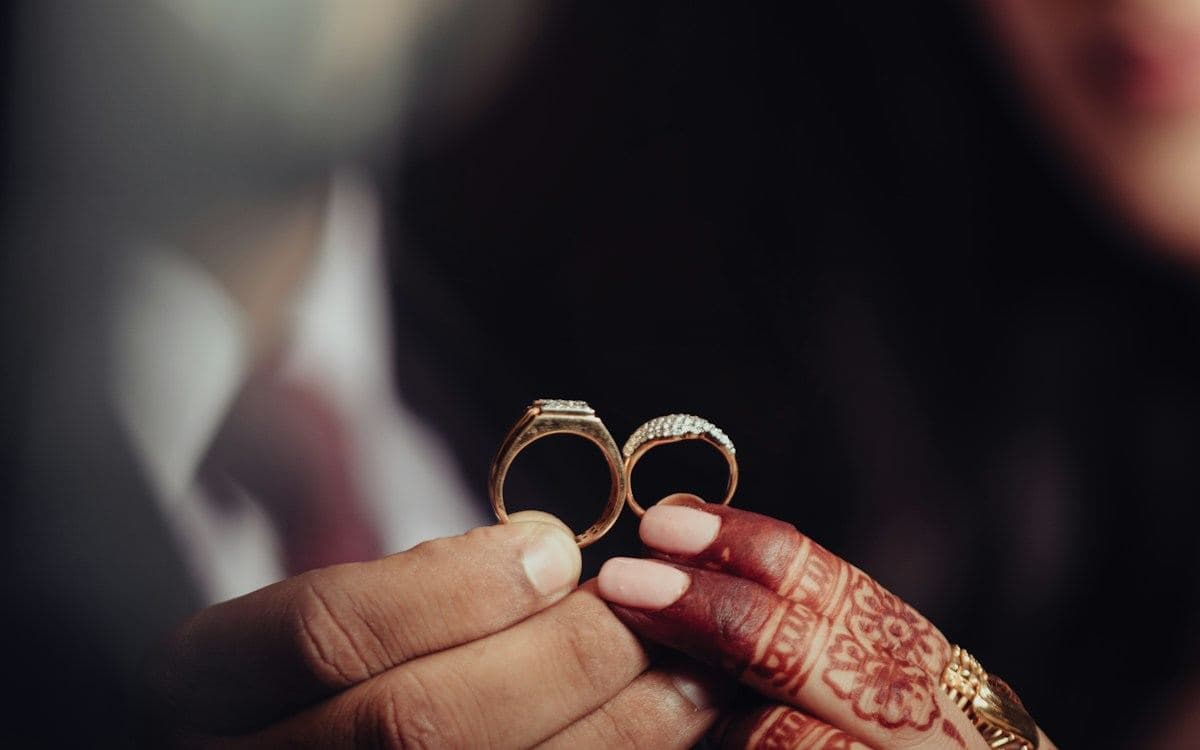
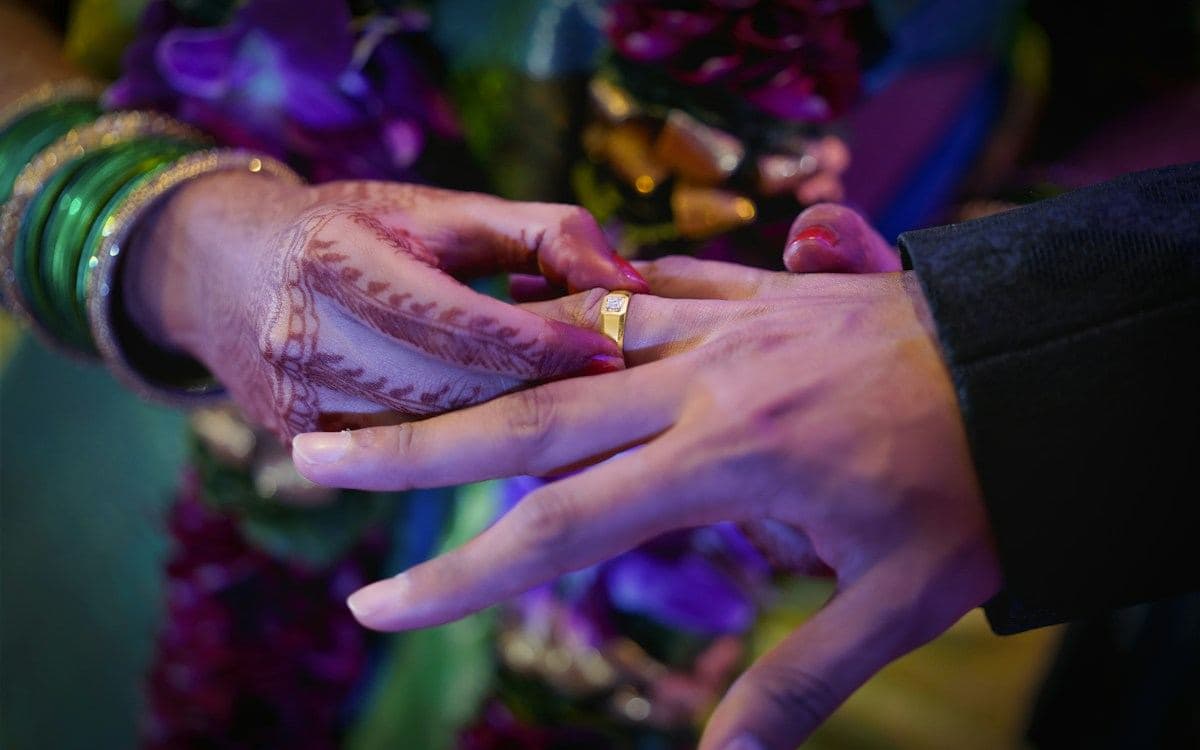
- Whether the ring exchange has a set time guests should be present for
The hall number is the most common omission at hotel venues. "The Leela Palace" is not an address when the hotel is running three events that evening; guests will wander.
The ring exchange timing is the second. If it happens at 6:30 and dinner is at 8, guests who arrive at 7:30 have missed the point of the evening. Say so.
Agreeing the guest list and who invites whom
Two families inviting from one invitation creates a coordination problem that is worth solving explicitly.
Decide who sends to whom. Usually each family invites its own guests using the same invitation, which means both families need the link or the card at the same time. A staggered send — one family invites a week before the other — produces awkward conversations between guests who know each other.
Decide the tone of the covering message separately. The bride's family may write to their relatives differently from how the groom's family writes to theirs, and that is fine. The invitation stays identical; the accompanying message varies.
Agree what happens with plus-ones and children. If the venue has a hard capacity, say so early. "We would love to have you both" invites a couple; silence invites a family.
Before you send
A short pre-send check catches most of what goes wrong.
Read every name aloud against the text each family sent. Check the date against a calendar — the day of the week is wrong on invitations more often than the date itself. Open the Maps link and confirm it lands at the venue entrance rather than a nearby road.
Send the invitation to one person in each family first and ask them to check it before it goes wider. This is the single most effective step, and it takes an hour.
Check the link preview by pasting it into a chat with yourself. An invitation whose preview shows a bare domain gets fewer opens than one showing the couple's names and date.
Finally, confirm both families are sending on the same day, and agree a reminder two to three days before the ceremony.
Quick checklist
- Get exact name spellings in writing from both families
- Agree whose parents are named, and in what order
- Name the specific hall, not just the hotel
- State the ring exchange time, not only the start time
- Include a Maps pin that lands at the venue entrance
- Decide plus-ones and children explicitly
- Have one person in each family proof it before sending wider
- Both families send on the same day
Frequently asked questions
In many communities the bride’s family is named first, but this varies by region and family, so ask rather than assume. Get both families to send their names exactly as they want them to appear and use that text verbatim — surnames are spelled differently between families, and an error on a formal invitation is noticed.
The specific hall at a multi-hall venue, and the time of the ring exchange. "The Leela Palace" is not enough when the hotel is running three events that evening. And if the ring exchange is at 6:30 with dinner at 8, guests arriving at 7:30 have missed the ceremony — state both times.
Yes. Each family usually invites its own guests using the same invitation, and a staggered send produces awkward conversations between guests who know each other. Agree a single send date, and let each family write its own covering message while the invitation itself stays identical.
State it explicitly. "We would love to have you both" invites a couple; saying nothing invites a family. If the venue has a hard capacity, raise it early with both families rather than after the guest list has been circulated.