Roka is the moment a marriage is formalised in the eyes of both families, before the rings, before the formal engagement party, before the wedding date is set. Because it sits at an unusual point in the wedding journey (significant but intimate), the invitation needs to strike the right balance: formal enough to honour the occasion, personal enough to reflect the families' warmth. Here is everything you need for a Roka invitation that works.
Six ready-to-use Roka and Sagai invitation message samples
Sample 1. Formal, from the bride's family
With great joy and gratitude, [Bride's Father's Name] and [Bride's Mother's Name] invite you to the Roka ceremony of their daughter [Bride's Name] with [Groom's Name], son of [Groom's Parents' Names], on [Date] at [Time] at [Venue]. Kindly grace this auspicious occasion with your presence and blessings.
Sample 2. From both families jointly
The families of [Bride's Name] and [Groom's Name] joyfully invite you to celebrate their Roka/Mangni on [Date] at [Time] at [Venue], [City]. Please join us for this special beginning. Warm regards, [Both Families' Names]
Sample 3. Casual, for friend groups
[Bride's Name] said yes! 🎉 We're celebrating with a Roka on [Date] at [Venue]. Join us at [Time] for the ceremony, followed by dinner. Tap the link for full details.
Sample 4. Short WhatsApp group message
Sharing the invitation for [Bride's Name] & [Groom's Name]'s Roka ceremony on [Date] at [Venue], [City]. Tap below for schedule and directions. 🙏
Sample 5. Sagai, more formal North Indian style
With the blessings of our elders, [Father's Name] & [Mother's Name] cordially invite you to the Sagai of their daughter [Bride's Name] with [Groom's Name]. [Date] | [Time] | [Venue Name], [City]. Your presence will bring joy to this auspicious occasion.
Sample 6. Mangni, religious tone
By God's grace, [Parents' Names] joyfully invite you to the Mangni ceremony of [Bride's Name] and [Groom's Name] on [Date] at [Time] at [Venue]. The ceremony will begin with a short pooja, followed by ring exchange and dinner.
Roka vs Mangni vs Sagai: which term to use when
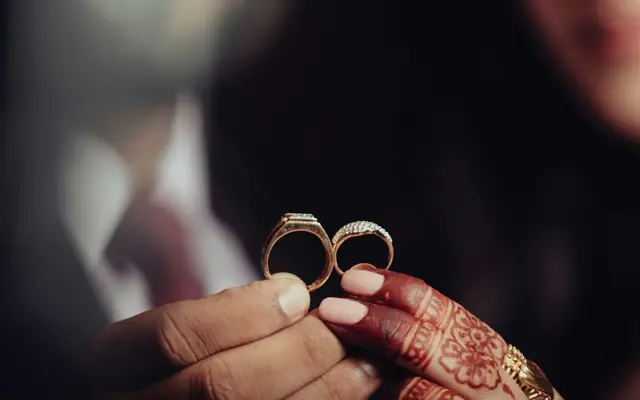
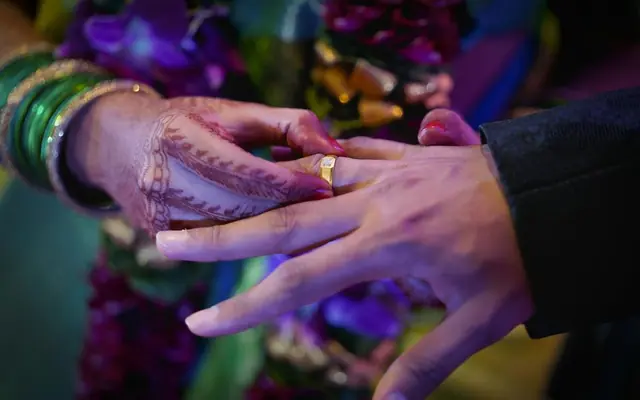
These three terms are often used interchangeably but carry different meanings in different communities. Roka (literally "stop" or "hold") is the initial family-to-family agreement ceremony where both families formally agree to the match. It is typically intimate: only the immediate family attends. No rings are usually exchanged at a Roka. Mangni is the formal ring exchange ceremony, more widely celebrated, with a larger guest list. Sagai is the North Indian equivalent of Mangni, a ring exchange that marks the official engagement. In practice, many families use Roka and Sagai interchangeably for the same event. Use the term your own family and community recognises. If your family says "Roka" for the ring ceremony, use Roka. The invitation should feel authentic, not technically correct by someone else's definition.
What the Roka invitation should communicate vs the full engagement
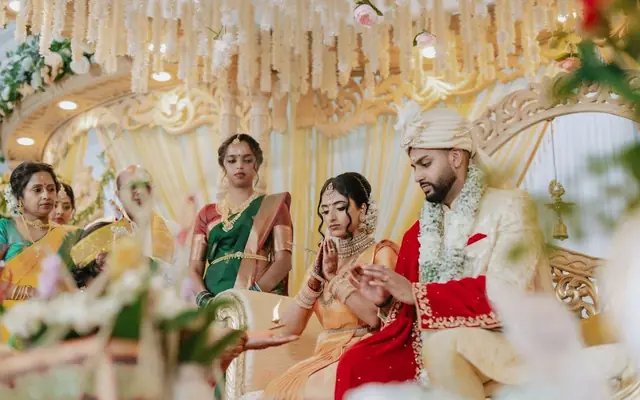
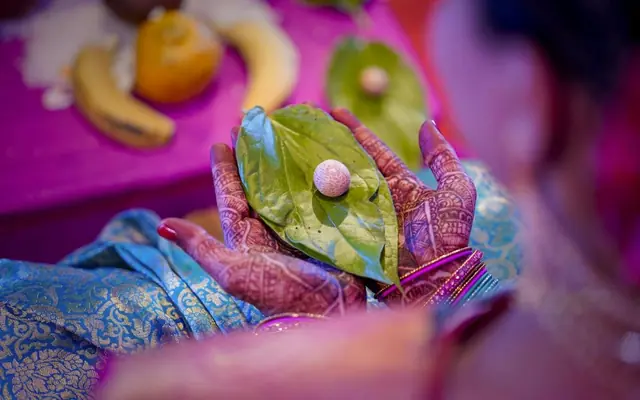
A Roka invitation communicates one thing above all: this is an intimate, close-family occasion. Unlike a Sangeet or wedding, the Roka is not a production. The invitation tone should reflect that: warm, personal, and without the event-listing that characterises larger celebrations. Include: the date, time, venue (usually a family home or restaurant), who is hosting, and a brief note about the ceremony. You do not need a detailed schedule on a Roka invitation: typically it is a short pooja, a gift exchange or tilak ceremony, and a meal. Save the elaborate scheduling for the Engagement or Wedding invitations.
Who to invite to a Roka
The Roka guest list is typically limited to immediate family and close family friends from both sides. Think: parents, siblings, grandparents, and perhaps two or three closest family friends. It is not the event for distant relatives, office colleagues, or neighbours. This is actually part of its meaning: the intimacy signals that the families trust and honour each other enough to formalise the match in a private setting before announcing it publicly. When creating the digital invitation, consider making the access direct (no password needed) but keeping the WhatsApp sharing to a small, specific group rather than broadcasting to extended family networks. The full engagement event can reach the broader network.
Quick checklist
- Use the ceremony term your family actually uses (Roka, Sagai, or Mangni), not a term borrowed from a template.
- Keep the guest list tight. Roka is typically close family only.
- Include both families' names in the invitation for a proper joint introduction.
- Note if there is a small pooja before the ring exchange so guests know to arrive on time.
- Add a venue Maps link. Even for a home event, guests travelling from another part of the city need it.
- Avoid elaborate ceremony scheduling: a Roka is usually one or two hours, not a full-day event.
- Send 7–10 days in advance, with a reminder the day before.
Frequently asked questions
Absolutely. A digital invitation works well for Roka because the guest list is small and personal: you can share it individually rather than to a group. The invitation page can carry the venue address and map, which is useful even for family members who have not visited the host's home before. A digital invite also makes it easy to share a reminder link the day before without any extra effort.
Match the formality of your family's culture. If your family communicates formally at big occasions, a formal invitation is appropriate. If your family is more casual and everyone already knows the couple, a warm and personal invitation message works fine. The key signal to send is that this is a significant occasion, not just a dinner, so whatever your baseline, step it up slightly. A short pooja mention and both families' names are the two elements that signal the right level of occasion.
It depends on your family's preference. Some families prefer to announce the wedding date at the Roka itself as part of the celebration. In that case, leave it off the invitation and let the Roka be the occasion for the announcement. If the wedding date is already publicly known within the family, including it in the invitation is fine. It can read as "On the occasion of [Bride's Name] and [Groom's Name]'s Roka, with their wedding set for [Date]." This adds context and excitement without overshadowing the Roka itself.